What Is the Fastest US Proxy Right Now? 2026 Performance Benchmarks
Speed is not merely a convenience in the hyper-competitive world of web scraping, localized SEO, and high-frequency trading but a prerequisite to success in those arenas. In 2026, the connections with low-latency demand have soared through the sky. The lag of overcrowded servers or old infrastructure can no longer be afforded by businesses. When the focus is on performance, the discussion will invariably be directed towards identifying the most effective gateway to the American digital market.
Although the most common starting point for users is the search query: what is the fastest US proxy, the solution is not usually just a single IP address. In its place, it is available in performance architectures such as the Evomi US IP network. Speed here can be determined by the time-to-first-byte (TTFB) and the resiliency of the connection during peak loads. In professional uses, using high-speed US residential proxies has become the norm to avoid congestion and to make automated scripts run as fluidly as a local user would.
Why Connection Speed is Critical for US-Based Operations
To global companies, a US proxy does not merely entail a change of location; it entails cutting down the geographic distance between their requests and the target servers found within key American data centres such as Northern Virginia or Silicon Valley.
- Real-Time Data Extraction: A 500ms latency can cause stale data in real-time tracking of stock prices or a limited-edition product drop.
- Verification on a Fast Proxy: Rapid-fire verification with thousands of variations can be done successfully and rapidly using fast proxies without the browser timing out.
- SEO and Local SERP Tracking: Large-scale audits of Google results in the US can now be accomplished in minutes, instead of hours.
- Slower Detection: Sluggish proxies have a phenomenon known as jitter, which can make anti-bot systems aware that the traffic is created artificially.
Comparative Analysis of the Fastest US Proxy Competitors
In deciding on the fastest options, we classify proxies into three key groups. Although datacenter proxies are technically the swiftest, since they have a fiber-optic source, they are readily blocked. Hence, the effective speed of a proxy also has to take into account its success rate.
1. The Evomi US IP Network
The Evomi US IP Network has acquired considerable momentum in 2026 since it is the one that provides a balance between raw speed and high anonymity. It uses a decentralized infrastructure to route traffic via the most efficient nodes, thus minimizing the number of hops that a data packet would traverse a lot.
2. High-Bandwidth Residential Nodes
Residential proxies are generally slower in comparison to datacenter ones as they are based on home network connections. Nonetheless, high-bandwidth providers (Fiber/Gigabit connections) now filter their pools to high-bandwidth users (Turbo), and compete with the server speed of high-speed switches.
3. ISP Proxies (Static Residential)
These are a composite solution. They are hosted on servers but are subscribed to an Internet Service Provider (ISP) such as Verizon or AT&T. They provide the bare speed of a data center, the trust of a residential IP.
Speed Comparison Table: 2026 Proxy Benchmarks
| Proxy Type | Avg. Latency (ms) | Success Rate | Ideal Application Case |
|---|---|---|---|
| Evomi US IP Network | 150 – 300ms | 99.4% | Scalable Enterprise Scraping |
| Standard Residential | 600 – 1200ms | 98.1% | General Market Research |
| Static ISP Proxies | 50 – 150ms | 95.0% | Account Management |
| Public/Free Proxies | 3000ms+ | < 10% | None (Avoid) |
Technical Factors That Affect US Proxy Velocity
When you are already testing the performance of analysis on the question of what is the fastest US proxy in your own environment, you should also take into account these technical variables that might be slowing down your performance:
1. Protocol Efficiency: HTTP/3 and SOCKS5
Older protocols such as HTTP/1.1 are susceptible to head-of-line blocking. Recent networks, especially the Evomi US IP network, have SOCKS5 and HTTP/3, which enable more effective multiplexing and quicker data transfer over unstable connections.
2. Geographic Proximity and Edge Computing
A proxy server in New York will never be as quick to respond to a Wall Street server as a proxy server in Los Angeles will be. The optimal providers permit either State-level or City-level targeting to reduce physical latency.
3. Concurrent Session Handling
Free proxies can limit the number of connections at any given time. Thousands of threads can be simultaneously supported with high-speed networks, and with thousands of threads, you can grab more data simultaneously in the same time, and work in parallel.
How Network Architecture Influences Performance
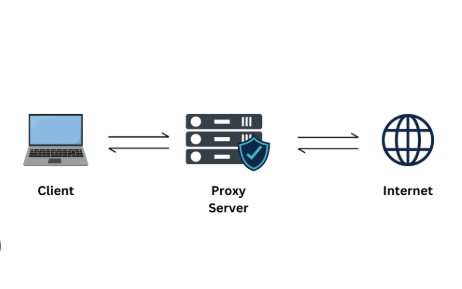
A common myth about a proxy is that it is nothing more than a middleman. The software layer that handles the IP pool is in fact, the most prevalent bottleneck.
- Smart Rotation: Intelligent networks forecast IPs that are just going dead and spin your session to a healthy node before the connection goes dead.
- Load Balancing: HPNs distribute traffic on the US nodes evenly to avoid the overloading of one server to a choke point.
- Backconnect Technology: Users can connect to a single, super proxy endpoint, and the provider takes care of the more complicated logic of changing IPs in the background, leaving the user side latency low.
Frequently Asked Questions: Optimizing for Maximum Speed
Q: Does the use of a US proxy always slow my internet?
A: Generally, yes, because of the extra “hop.” But with a poor international routing of your local ISP, you can still gain better speeds to US-based sites with a higher speed US proxy giving you a direct data route.
Q: What do I do to test the speed of my proxy?
A: Do not simply use a typical speed test site. Measure the Time to First Byte (TTFB) with a tool such as cURL against the particular site you are interested in scraping.
Q: What makes the Evomi US IP network faster than other providers?
A: Evomi has a custom routing algorithm that chooses the IPs in accordance with their load and the latency record, so that you are never assigned to a node that is currently loaded.
Selecting the Right Infrastructure for Performance
When trying to find out what the fastest US proxy is, the statistics invariably lead to a compromise between infrastructure and IP quality. Although datacenter IPs provide raw speed, they are slow in practice because they have a high failure rate on secured websites, and require frequent retries.
In companies demanding both high-speed operation and unhindered access, the Evomi US IP network is one of the most preferred options. Using optimized US residential proxies, you can be assured that your data collection activities are nimble, stealthy and, most importantly, fast enough to beat the competition across the finish line.