How Custom Printed Signage Helps Telford Businesses Attract Attention
Introduction
A customer visiting a business for the first time should be able to recognise the premises, understand what the company offers, and find the right entrance without unnecessary confusion. Clear, well-designed signage makes this possible while helping businesses communicate their identity before a conversation even begins. From shopfront displays and reception signs to promotional banners for local events, the right signage can make everyday interactions easier and more professional.
For organisations looking to improve their visibility, Personalised signage Telford offers a practical way to combine business promotion with useful information. Rather than relying on generic signs, businesses can create displays that reflect their branding, suit their surroundings, and serve a specific purpose.
1. Why Effective Signage Matters for Local Businesses
Signage often provides the first introduction to a business. A carefully designed sign can help potential customers recognise a company, understand its services, and remember its name when they need those services in the future.
For example, a retail shop can use an attractive external sign to stand out among neighbouring premises. An office can display its company name near the entrance, while a workshop can use directional signs to guide visitors towards reception or designated collection areas.
These applications demonstrate that signage is more than a decorative feature. It helps communicate information quickly, especially when people are walking past, driving through a commercial area, or visiting a location they have never encountered before.
Custom Printed Signage gives businesses greater control over how that information is presented. Colours, logos, wording, graphics, and dimensions can be selected to suit the intended audience and location.
A consistent approach across different signs also helps establish a recognisable visual identity. When the same brand colours and design elements appear on shopfronts, indoor displays, and promotional materials, customers can make a stronger connection between the sign and the business behind it.
2. Choosing the Right Sign Material for the Job
One of the most important decisions when ordering signage is selecting a material that suits its intended environment. A sign designed for an indoor reception area may have very different requirements from a display exposed to rain, sunlight, and changing temperatures.
The available signage options include Di-Bond, acrylic, Foam Ex, Corex, and other materials. Each offers different characteristics, making it important to consider the location, appearance, durability requirements, and budget before choosing a product.
Di-Bond signage
Di-Bond is commonly used for rigid display applications where a clean, professional finish is desirable. Depending on the specification, it can be suitable for business signs, display boards, and other applications that require a solid panel.
Acrylic signage
Acrylic can provide a smooth, modern appearance that works well in reception areas, offices, retail environments, and branded interiors. Its finish can help create a polished look for company names, logos, and other visual elements.
Foam Ex signage
Foam-based boards are often considered for lightweight indoor displays, presentations, exhibitions, and temporary promotional installations. They can be useful when ease of handling is a priority.
Corex signage
Corex is a lightweight corrugated plastic material frequently used for temporary signs, event displays, and promotional boards. It can be useful for campaigns where signs need to be transported, positioned, or replaced with relative ease.
PVC banners and roller banners
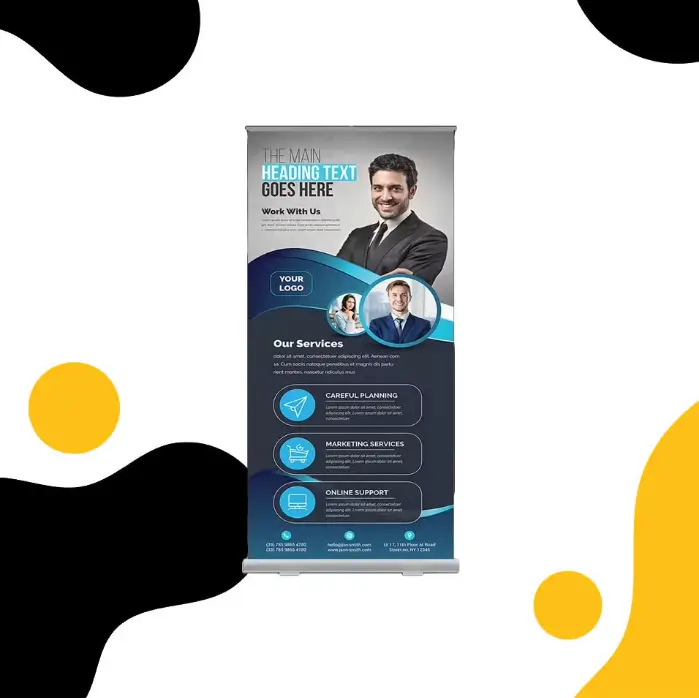
PVC banners are useful for promotional messages, outdoor advertising, and event displays, subject to the selected material and installation requirements. Roller banners provide a portable option for indoor exhibitions, reception areas, presentations, and trade shows.
Understanding these options helps businesses choose signage based on its purpose rather than simply selecting the cheapest available material.
3. The Benefits of Custom Printed Signage
Personalised signs can support several aspects of business operations, from attracting attention to improving the experience of customers and visitors.
Improved brand recognition
A sign displaying a business name and logo helps people associate a physical location with a particular company. Repeated exposure can make the brand easier to recognise over time, particularly when its design remains consistent across different marketing materials.
More effective promotion
Businesses can use signs to communicate new services, seasonal offers, product launches, and special events. A well-positioned display can bring a message to the attention of people who may not regularly visit the company’s website or social media pages.
Easier navigation
Directional signage helps visitors identify entrances, reception desks, departments, parking areas, and other important locations. This can reduce confusion and make premises easier to navigate.
A more professional appearance
Coordinated signage can make a business environment look organised and considered. Matching reception displays, door signs, and external branding can reinforce the impression that the company pays attention to details.
Greater design flexibility
Personalisation allows businesses to adapt their signs to different audiences and situations. A company may prefer understated branding for an office, bold promotional graphics for an exhibition, or concise directional messages for a busy commercial building.
Better event communication
Exhibitions, community gatherings, sporting events, and business conferences often require signs that communicate essential information quickly. Custom displays can incorporate event names, schedules, sponsor logos, directions, and other relevant details.
The value of each benefit depends on how effectively the sign communicates its message and whether it is suitable for the location where it will be displayed.
4. Using Signage to Improve Customer Navigation
A visually attractive sign may catch someone’s attention, but its wording and placement determine whether it is genuinely useful. Businesses should think about the questions visitors are likely to ask and use signage to answer them clearly.
For a small office, this might involve displaying the company name near the entrance and providing simple directions to reception. A larger commercial building may require signs identifying separate departments, meeting rooms, facilities, and exit routes.
Retail premises can benefit from signs that identify different sections, highlight promotional areas, or direct customers towards collection points. At temporary events, clearly positioned displays can help visitors find registration desks, exhibition stands, and activity areas.
When planning directional signage, consider the following principles:
- Keep messages concise: Short wording is generally easier to understand at a glance.
- Use readable text: Letter size should suit the viewing distance and lighting conditions.
- Maintain contrast: Text and background colours should make the message easy to distinguish.
- Choose sensible positions: Place signs where visitors naturally need information.
- Use consistent design: Matching visual elements help people understand that different signs belong to the same organisation.
- Consider accessibility: Make essential information as easy as reasonably possible for different visitors to read and understand.
For safety-related signs, businesses should follow the relevant requirements rather than treating them as ordinary promotional displays.
5. Designing Signage That Reflects Your Brand
A successful sign should communicate the business’s personality without overwhelming its audience. Too much text, excessive colours, or poorly arranged graphics can make an otherwise useful display difficult to understand.
Begin with the main objective. Is the sign intended to attract new customers, identify a building, promote an event, or provide directions? Establishing this purpose helps determine which information deserves the most attention.
Next, select the essential elements. These might include a logo, business name, short message, website address, telephone number, or relevant graphic. Not every sign needs all these details. A directional board, for instance, may work best when it contains only a clear instruction and an arrow.
Typography also matters. Decorative fonts may suit some creative businesses, but simpler lettering is often more practical when people need to read a message quickly. Similarly, a strong contrast between the text and background can improve legibility.
Businesses should also consider the surrounding environment. An outdoor sign near a busy road may need a bolder design than a small plaque positioned beside an office door.
For organisations without an established design, professional assistance can help turn an initial idea into a layout that balances appearance, readability, and practical requirements.
6. Planning Signage for Events and Promotional Campaigns
Events create different signage requirements from permanent business premises. Organisers may need displays that can be transported easily, installed quickly, and reused for future occasions.
A roller banner can introduce an organisation at a trade show, while a PVC banner can communicate an event name or promotional message across a larger area. Lightweight boards may help identify individual stands, display schedules, or provide instructions to visitors.
Planning ahead is especially important when multiple signs need to share the same design. Consistent colours, logos, and wording help visitors identify different areas of an event without making the display feel disconnected.
Before ordering, prepare the final text and artwork, confirm the required dimensions, and establish where each sign will be positioned. Check whether the display will be used indoors or outdoors and ask about suitable materials, mounting options, and expected production times.
Bulk purchasing may also be worth considering when an organisation needs several signs for different locations or a series of related events. Requesting a quotation for the complete requirement can make it easier to compare options and plan the available budget.
7. Finding Personalised Signage in Telford
Businesses that need signage for different environments can benefit from exploring a supplier with several material and display options. Having access to indoor boards, outdoor signs, roller banners, and PVC banners can simplify the process of planning a coordinated set of promotional materials.
The Personalised signage Telford service described by Printzpro includes Di-Bond, acrylic, Foam Ex, Corex, and other signage options. The business also offers roller banners and PVC banners for external use, alongside design assistance for customers developing their own signs.
Bulk-buy availability may be useful for organisations that require several displays, while the quotation service provides an opportunity to discuss individual requirements before proceeding.
Businesses can contact the team on 01952 936 452 to discuss their project and request pricing. It is helpful to explain the intended use, preferred dimensions, material requirements, design ideas, and quantity when making an enquiry.
Providing these details at the beginning can help establish which options are worth considering and whether the proposed signage is suitable for its intended setting.
See also: How Quality Linens Can Strengthen Your Business
Benefits of Investing in Custom Printed Signage
A well-planned signage project can provide lasting practical and promotional value.
- Helps potential customers recognise a business and its premises.
- Creates a consistent visual identity across different locations.
- Makes entrances, departments, and important areas easier to identify.
- Supports advertising for products, services, and special offers.
- Improves the presentation of exhibitions, conferences, and community events.
- Allows businesses to select materials suited to different environments.
- Provides flexibility when updating branding or communicating new information.
To gain these benefits, businesses should consider visibility, material suitability, design quality, installation, and ongoing maintenance when planning their signs.
Conclusion
Signage plays an important role in how businesses communicate with customers and organise their physical spaces. From a prominent external display to a simple directional board, the right sign can make information easier to understand while helping a company establish a recognisable identity.
Custom Printed Signage allows businesses to combine their branding with practical communication, whether they need permanent displays, temporary promotional boards, or banners for special events. Selecting suitable materials and keeping the design clear can help ensure that each sign serves its intended purpose.
For organisations looking to improve their premises or prepare for an upcoming campaign, Personalised signage Telford provides an option worth exploring. By defining the objective, preparing the artwork, and discussing material choices and quantities before ordering, businesses can develop signage that looks professional and works effectively in its intended environment.